ECM science
What is the extracellular matrix (ECM) in skin?
The extracellular matrix is the material around cells. In the dermis, it includes fibres and other molecules that help provide support, resilience and hydration. It also forms part of the environment in which cells function.
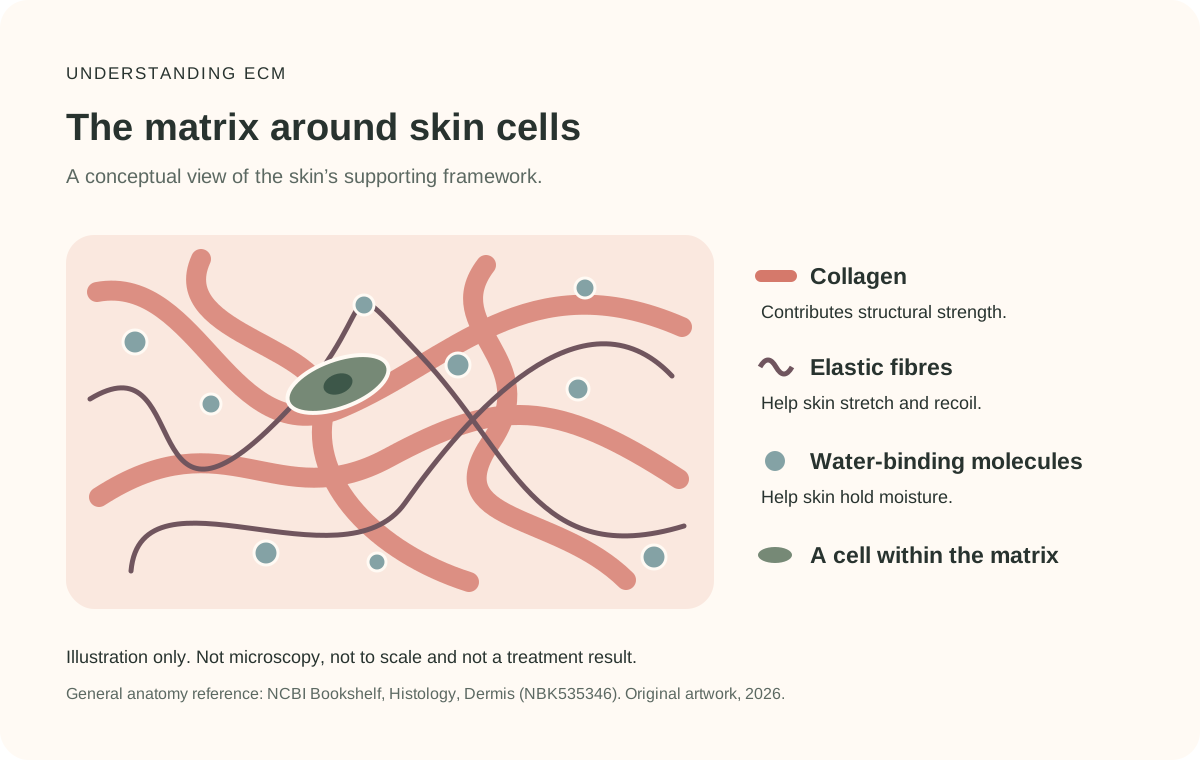
Three parts of the picture
- Collagen: structural support
- Collagen fibres contribute to the dermis’s strength and structure.
- Elastin: stretch and recoil
- Elastic fibres help skin stretch and return toward its original shape.
- Supporting matrix: water and organisation
- Glycosaminoglycans and proteoglycans contribute to the water-rich material around cells and fibres.
Biology is the starting point
Learning what ECM does helps explain the scientific interest in matrix-based materials. It does not by itself show that a treatment will restore skin, reverse ageing or produce a particular result. Those questions require product-specific clinical evidence.
What has been studied with Re2O?
The published Re2O investigation combined a small clinical trial with laboratory, tissue and animal experiments. The experimental work explored possible biological effects. Those findings help generate explanations and research questions; they are not the same as outcomes established in people.
The paper describes the matrix as approximately 80% collagen, 3% elastin and 0.4% sulphated glycosaminoglycans. These figures describe the material studied in that paper; they are not a batch guarantee.